
Ken Imoto
AI Agent Engineer
LLMO · Context Engineering · Harness Engineering
Creator of the LLMO Framework. I design harnesses that automate dev, ops, and marketing with Claude Code.
400K+
Total PV (Qiita+Zenn)
40+
Books (Kindle+Zenn)
6
Research Papers
Now
- Building the LLMO Framework, LLMO Checker, and the Open LLMO Research Initiative
- Documenting AI-Native MEO as the local-business implementation of LLMO
- Applying Harness Engineering to products — dev, ops, and marketing with AI agents
- Publishing books & articles from hands-on practice
Updated October 2026
Publications
AI DEVELOPMENT


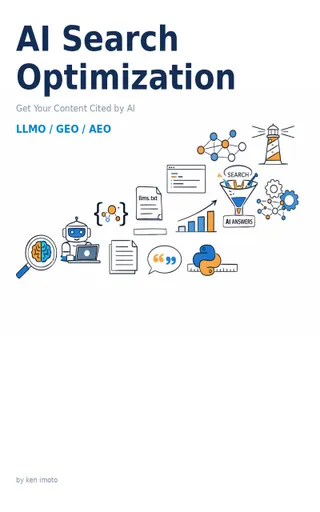
LLMO / AI SEARCH OPTIMIZATION
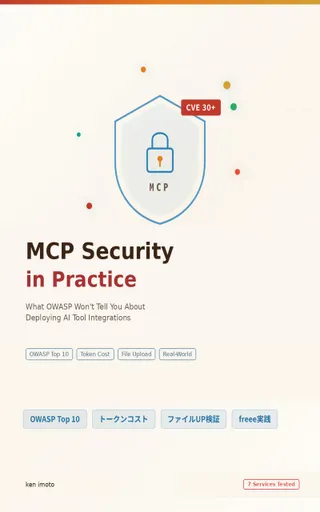
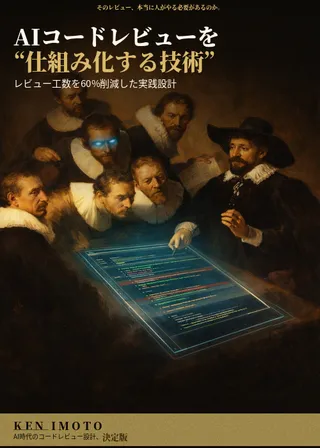
SECURITY & QUALITY
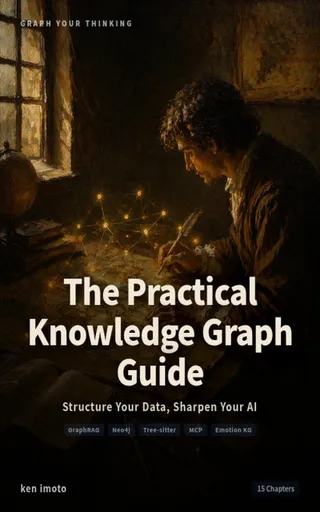
KNOWLEDGE & DATA
ENGINEERING CULTURE
Latest Articles
- Claude Code Max vs API vs Qwen: 4h Breakeven Sep 2026
- Gemini CLI vs Claude Code: Login Blocked Day 1 Sep 2026
- nanochat GRPO Is Just REINFORCE + a 1-Line Regex Sep 2026
- 2.8x Traffic Spike: How to Identify Bot Traffic Sep 2026
- Bing Webmaster Tools vs Google: 787 queries Sep 2026
- Zenn noindex on Every Post: 8 Weeks Unnoticed Aug 2026
Papers
Rhythmic Monotonization in LLM-Generated Text Is Cross-Lingual: Evidence from Three Languages and Seven Models
Sequel to the two-layer fingerprint study: is rhythmic monotonization (lower burstiness, lower sentence-length CV) a Japanese quirk or a cross-lingual property? Seven LLMs against human baselines in English and Portuguese (853 Dev.to + 403 TabNews articles). AI lands on the monotonic side in all 70/70 cells (5 core metrics × 7 models × 2 languages), and the effect survives length residualization. Comma density is the lone metric whose sign flips by language (EN +0.45 / PT −0.83), motivating a three-layer signature/accent/dialect fingerprint framework. Current Claude-generation models monotonize at roughly 1/3 the strength of GPT-3.5 — the accent is fading.
Lexical and Rhythmic Fingerprints of Japanese LLM-Generated Text: A Cross-Model, Two-Layer Analysis
350 texts from 7 LLMs vs. 700 human articles, comparing lexical and rhythmic feature families under one controlled design. Rhythmic monotonization is real and model-universal (burstiness d = −0.96), yet vocabulary dominates human/AI discrimination (AUC 0.998 vs. 0.897), the opposite of the practitioner claim. Lexical profiles identify the generating model at 92% (rhythm: 51%), and a document-level re-analysis corrects our own prior study: 35% of the previously reported 651 excess words were token-counting artifacts.
→ Show 4 more papers→ Show fewer
When Free Executors Cost More: The Free-Executor Paradox in Iterative LLM Code-Repair Loops
Four LLM configurations on three Python code-repair tasks (breakage / refactor / feature-add) under a single deterministic correctness judge (mypy + ruff + pytest). The canonical "strong orchestrator + cheap executor" structure (Opus + local Qwen) turns out to be the most expensive cloud arm on every task because prompt-cached re-reads of executor summaries dominate any savings from delegating execution. Haiku-solo wins on dollar cost on the largest task (5.5× cheaper) at a 25% failure rate.
Excess Vocabulary in Japanese AI-Generated Text: A Cross-Model Quantitative Analysis
350 samples from 7 LLMs vs. 977 human articles. 651 statistically significant excess words identified. Newer Claude generations show increasing vocabulary bias (TTR: 0.52→0.29). Cross-domain classifier achieves AUC=0.946 in-domain but fails completely across genres. First Japanese excess vocabulary study with coevolution evidence.
AI Text Slop: Stylistic Convergence Across Six LLMs in Japanese Technical Writing
180 samples (6 models × 10 topics × 3 trials) measured with 16 pattern indicators. RLHF-aligned commercial models score significantly higher than OSS (Cohen's d = 1.01). Vocabulary and structural patterns dissociate (the "gpt-oss paradox"). Two corrections issued in 2026-08: the 20B model was gpt-oss:20b, not Swallow, and the "humans score higher on structure" result is withdrawn as a text-length artifact.
AI Blue: Systematic Color Recognition Bias in Vision-Language Models
We tested 4 VLMs × 40 colors × 480 observations. Commercial models miss intermediate hues. 95% of AI-generated UI colors land on blue-purple. First quantitative link between VLM color bias and the "AI Slop" phenomenon.
Research
LLMO Framework
Optimizing content visibility in AI search engines
Voice AI 300ms
Breaking the latency barrier for human-AI conversation
Context Engineering
CLAUDE.md, multi-agent architecture, AI dev workflows
Generative Agent Simulation
LLM multi-agent social simulation
Fragrance × AI
AI-powered perfumery and personality-based scent design
Projects & Sites
Propel-Lab — company
AI Systems consultancy focused on LLM development environments and harness engineering for enterprises.
LLMO Framework — open methodology
A practical framework for LLM Optimization (AEO + GEO). Self-hosted documentation site as the canonical source.
mypcrig — PC selection (JA)
A use-case-driven guide for choosing the right PC: AI dev rigs, gaming, laptops, and parts. Bench-driven recommendations.
legacydram — whisky × engineering eyes
A curation media reading every bottle as somebody's commit history. People · Craft · Tasting.
ainativemeo — AI-Native MEO playbook
Local-business optimization for the era when customers ask AI, not search engines, for recommendations. Engineering-layer reading of Google Business Profile, JSON-LD survivability, and per-engine citation behavior. Bilingual EN / JA.
Open Source
LLMO / AI SEARCH
open-llmo — GitHub organization · MIT
The Open LLMO Research Initiative. Specs, validators, and tooling for measuring how AI-retrievable a URL is — beyond traditional SEO signals.
llmo-checker — TypeScript CLI · MIT
A Lighthouse-style CLI that scores how AI-retrievable a URL is. Runs static checks for llms.txt, JSON-LD, robots policy, and semantic structure, and outputs a 0–100 LLMO Score as JSON. v0.1 draft.
RAG & RETRIEVAL
rag-db-advisor — Python · MCP + CLI · MIT
An evidence-based advisor for RAG stack decisions — every claim backed by rag-retriever-bench measurements. Ask which vector backend fits your workload or which operational trap you're about to step on; it answers only from measured evidence, over MCP or CLI.
rag-retriever-bench — Python · MIT
A benchmark harness for RAG retrieval backends: same corpus, same queries, same metrics — swap the database. Seven backends (pgvector, ClickHouse, Qdrant, Weaviate, Milvus, Chroma, LanceDB), deterministic recall / latency / ingestion metrics with no LLM judge, plus a per-backend self-check that catches silent full-scan degradation.
VOICE & SPEECH
voice-clone — Python · MIT
A voice-cloning tool built on Qwen3-TTS. Clone a voice from ~3 seconds of audio and have any text read in that voice. WSLg recording, multi-language.
speech-habit-lens — Python CLI · MIT
A 1-minute speech habit analyzer combining AmiVoice ESAS (20 acoustic emotion parameters) with an LLM. Three layers — acoustic, textual, and the cross-layer that links body and language — rendered as a Markdown report.
DEV UTILITIES
compact-ops — Claude Code plugin · MIT
A transparent plugin that keeps Claude Code sessions coherent across context compaction: structured state capture before /compact, recovery injection right after compaction and on --resume, plus a self-contained usage warning. Derived from u-ichi's compact-plus.
domain-pre-flight — Python CLI · MIT
A pre-flight check before you register a domain for a new site or app. Structure, history, typosquat, multi-language semantics, LLMO, and trademark deeplinks in one command.